
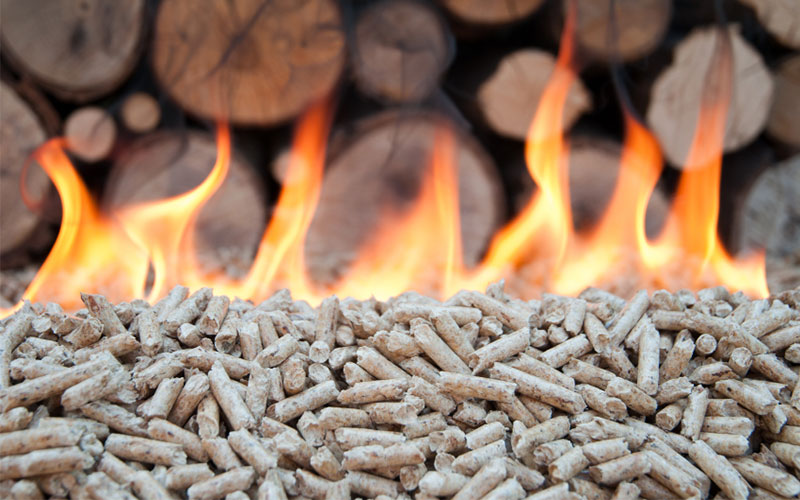

Transforming Biomass into a Premium Fuel
Biomass Pretreatment
The Problem with Raw Biomass
While biomass is a renewable and widely available resource, its raw form is not well-suited for efficient energy use. High moisture levels increase transportation costs and reduce combustion performance. Its low bulk density makes storage and handling inefficient, while inconsistent physical properties can lead to uneven processing. Raw biomass is also prone to biodegradation, including mold and rot during storage. Lastly, it is difficult to grind, requiring significant energy input. These challenges make pretreatment essential for transforming raw biomass into a high-quality, dependable fuel.
Feedstock selection affects:
The Role of Pretreatment
Pretreatment is the key first step that allows biomass to be converted into:
Reliable industrial fuel (pellets, biocoal)
Feedstock for pyrolysis, gasification
Bio-based chemicals
Pretreatment improves:
Moisture content
Energy density
Storage stability
Flow properties
Combustion or conversion efficiency
NorvanTech specializes in choosing and optimizing the right pretreatment for your feedstock and application.
1. Torrefaction: Thermal Upgrading for Biomass
Torrefaction is a mild pyrolysis process that involves heating biomass in a low-oxygen environment between 200 and 300 degrees Celsius for 15 to 60 minutes. During this process, hemicellulose decomposes, and lignin and cellulose partially break down. The resulting solid product is hydrophobic, energy-dense, and much easier to grind.
Torrefaction reduces moisture content to just 1 to 3 percent and increases energy density by around 30 percent. Once densified, torrefied biomass has better flow characteristics, enhanced storage performance, and much lower grinding energy requirements.
This method is widely used in Europe for co-firing with coal in power plants like Drax in the UK and Amer 9 in the Netherlands. It is also used in cement kilns and small-scale pellet systems. Reactor designs include vertical and horizontal moving beds, fluidized beds, and emerging microwave torrefaction systems.
2. Steam Pretreatment: Enhancing Pellet Quality
Steam pretreatment involves exposing biomass to saturated steam at 180 to 240 degrees Celsius, followed by rapid decompression that breaks down the structure of the biomass. This is often referred to as the Masonite process. The material is then dried again and pelletized.
This approach greatly improves pellet durability, hydrophobicity, and energy content—making it ideal for demanding export markets such as Japan and South Korea. Steam-treated pellets resist disintegration during marine shipping and outdoor storage.
Although the process adds approximately 50 to 60 dollars per tonne in cost, it is often justified by access to premium markets that require high-quality fuel. In British Columbia, several projects already use steam pretreatment to produce export-grade pellets.
3. Other Pretreatment Methods
Other less commonly used pretreatment options include ammonia fiber explosion and acid or hydrothermal catalysis. These are typically used for bioethanol or biochemical production rather than for solid biofuel applications, as they involve higher chemical handling costs and more complex infrastructure.
How NorvanTech Supports Clients
We guide clients through the full pretreatment design and integration process. This includes identifying the most suitable method for each feedstock, modeling process energy balances, and ensuring systems are compatible with forest residues, agricultural waste, energy crops, or even industrial byproducts.
NorvanTech also specializes in integrating pretreatment with densification strategies to ensure the final product meets all durability and transport performance standards.
Real-World Application: Idaho National Laboratory
A successful example comes from Idaho National Laboratory, where a vertical moving bed reactor was used to torrefy switchgrass. Operating at 150 to 300 degrees Celsius with a residence time of 15 to 60 minutes, the system produced a uniform, high-quality product. This demonstration highlighted the importance of reactor configuration and process control in scaling up torrefaction. NorvanTech’s modeling tools—built on Excel and Aspen Plus—enable similar optimization for clients worldwide.
Why Pretreatment Matters
Pretreatment is not optional if you want to produce biomass fuels that compete with fossil fuels or meet global standards. It is the foundation for creating stable, dense, and efficient fuel products that can be shipped, stored, and burned reliably.
With NorvanTech’s expertise, clients can design systems that transform low-grade biomass into world-class fuels—opening access to new markets and meeting both environmental and performance goals.