

The Key to Efficient Biomass Transport, Storage, and Use
Pelletization and Densification
Why Densify Biomass?
Raw biomass is bulky, moist, and difficult to handle. Wood chips, straw, and agricultural residues typically have low bulk density (less than 150 kg/m³), making them expensive to transport and store. They also absorb moisture easily, degrade in storage, and flow poorly through industrial equipment.
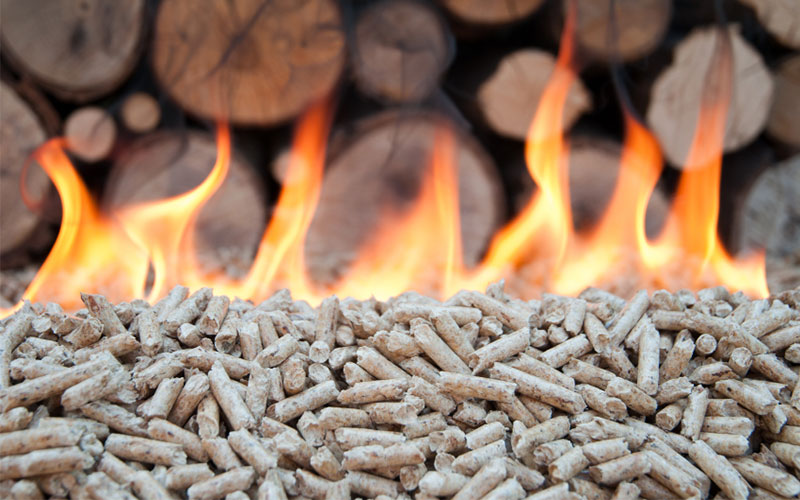
Densification transforms raw biomass into compact forms like pellets, briquettes, or cubes. The most common and scalable form is the cylindrical pellet — a durable, high-density biofuel suitable for global trade and automated systems.
The Pelletization Process
Pelletization involves a multi-step process:
Chipping or grinding to reduce particle size to ~3.2 mm
Drying to reach 10–15% moisture
Compression through a die to form pellets
Cooling from ~100°C to ambient temperature
Screening to remove dust and fines
Storage and transport as a stable, energy-dense product
This process improves fuel consistency, stability, and handling, making it suitable for bulk export and long-term storage.
Benefits of Densification
Pellets have a bulk density of 700–750 kg/m³ — almost 5 times higher than raw straw. Their energy density increases to 16–18 MJ/kg, and up to 24 MJ/kg if torrefied. Pellets flow easily, can be handled with standard machinery, and are more resistant to moisture, especially when steam-pretreated or torrefied.
These benefits translate into lower shipping costs, easier logistics, and higher quality combustion in industrial settings.
Key Equipment in Pelletization
The heart of the system is the pellet mill, which uses a die and roller mechanism. Ring dies are used in industrial systems, while flat dies serve small-scale operations. Operating temperatures reach 90–100°C under pressures of several hundred MPa.
Drying is critical before pelletization to prevent steam explosions. Cooling systems, like air-cooled conveyors or counterflow coolers, are used to stabilize the final product.
Densification and Torrefaction: Which Comes First?
There are two process flows:
Pelletize first, then torrefy — yields better durability, higher energy density, and improved grindability.
Torrefy first, then pelletize — often requires binders and results in lower mechanical strength.
NorvanTech recommends pelletizing first, followed by torrefaction. This approach improves energy content, hydrophobicity, and minimizes dust — ideal for export markets.
Torrefied vs. Regular Pellets
Torrefied pellets are far superior for demanding applications. Compared to untreated pellets, they:
Absorb less than 4% water when submerged
Deliver 20–24 MJ/kg energy
Have significantly better grindability
Can be stored and shipped without special protection
This makes them especially attractive for power generation, industrial heating, and global transport.
Process Integration
NorvanTech designs pelletization systems that integrate with:
• Steam pretreatment units
• Torrefaction reactors
• Downstream applications like co-firing, gasification, and pyrolysis
This integration ensures efficient use of energy, consistent product quality, and streamlined logistics.
Case Study: Europe’s Transition
European power plants like Drax (UK) and Amer 9 (Netherlands) initially used standard pellets. They are now moving to torrefied pellets to lower transport costs, improve fuel handling, and work seamlessly with coal-based infrastructure. NorvanTech uses similar strategies to modernize BC and Canadian bioenergy systems.
NorvanTech’s Support Services
We offer complete support to clients, including:
• Custom pelletization system design for any biomass type
• Process modeling to optimize die temperature, pressure, and binder use
• Quality testing for pellet durability, hydrophobicity, and grindability
• Full system integration from feedstock to energy export
Summary: Why Pelletization Matters
Pelletization is essential to make biomass practical for global use. When paired with steam pretreatment or torrefaction, it creates some of the highest-performing biofuels available today.
NorvanTech’s mission is to help clients build and optimize densification systems that deliver world-class biofuel at competitive cost, ready for today’s low-carbon energy markets.